
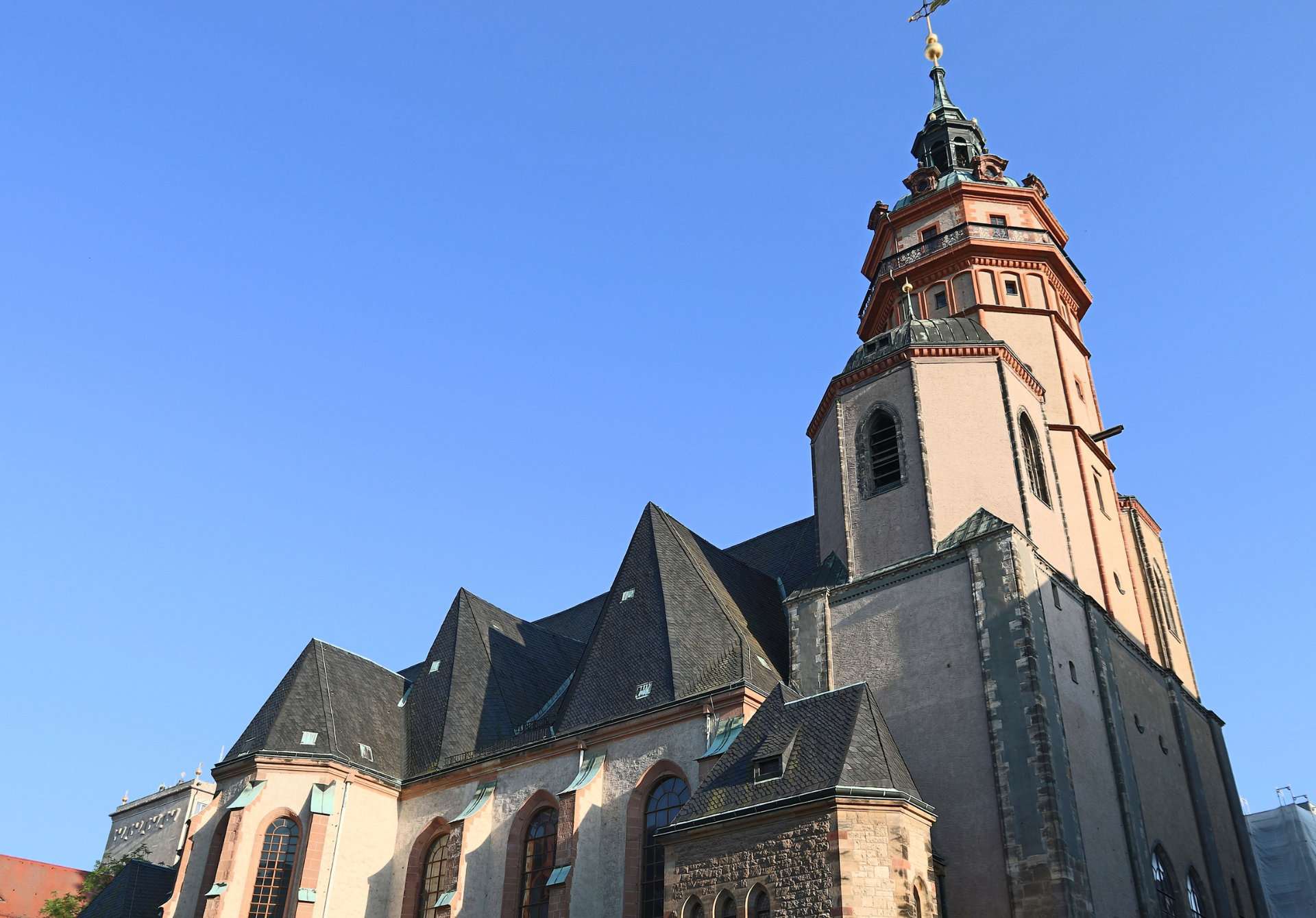
Picture this: you’re standing in a church where Johann Sebastian Bach premiered his masterpieces, Martin Luther once preached, and peaceful protestors gathered to topple communism. Welcome to St. Nicholas Church (Nikolaikirche) in Leipzig—a place where nearly 900 years of history whisper from every stone column and every lavender-painted pew.
If you’re planning a visit to Leipzig or helping guests discover the city’s hidden gems, St. Nicholas Church isn’t just another stop on the tourist trail. It’s the beating heart of Leipzig’s story, from medieval merchants to modern democracy.
A Living Timeline: From Romanesque Roots to Revolutionary Birthplace
Construction started in Romanesque style in 1165, making this the city’s oldest and largest church. But here’s what makes it fascinating for visitors: St. Nicholas has never stopped evolving. In the 16th century, the church was turned into a Gothic hall church. Baroque elements like the tower were added in the 18th century, creating an architectural time capsule that tells Leipzig’s story through stone and mortar.
The real showstopper? From 1784 to 1797 the interior was remodeled by German architect Johann Carl Friedrich Dauthe in the Neoclassical style. Those stunning Lavender and Cream pews and columns that visitors admire today were part of this elegant transformation.
Bach’s Musical Legacy Lives On
Music lovers, take note: In the 18th century, several works by Johann Sebastian Bach, who was as Thomaskantor the music director of Thomaskirche and Nikolaikirche from 1723 to 1750, premiered here. While Bach worked primarily at St. Thomas Church, St. Nicholas’s Church has been affiliated to its neighbouring church St. Thomas’s Church (Thomaskirche) from time immemorial.
Today’s visitors can still experience this musical heritage firsthand. I attended an Organ Recital here which was a wonderful experience, notes one recent visitor. The church continues to host concerts and performances, making it a living museum of classical music.
The Birthplace of Germany’s Peaceful Revolution
Here’s where St. Nicholas Church transforms from historical curiosity to modern legend. The church became renowned throughout Germany for its Prayers for Peace, which have been held there uninterrupted on every Monday since 1982. These weren’t just religious gatherings—they became the foundation of something extraordinary.
Through the peace prayers, which still take place every Monday at 17 p.m., St. Nicholas Church became the starting point of the Peaceful Revolution in 1989 and thus a symbol of German reunification. In the 1980s, prayer meetings held here gradually became the forum for those deeply dissatisfied with communism.
Imagine the courage it took: During these protests, people would bravely go inside the church to meet, knowing they risked arrest by East German authorities. The church became the starting point of Monday demonstrations in 1989, which contributed to East Germany’s peaceful revolution.
What to Expect During Your Visit
Planning a visit? Here’s your insider’s guide to making the most of St. Nicholas Church:
- Guided Tours: Visitors can join guided tours on Tuesdays, Thursdays, and Fridays at 5:00 PM, with additional Saturday tours at 11:00 AM for 5 euros
- Interior Highlights: The neoclassical interior with its distinctive lavender and cream color scheme creates an unexpectedly elegant atmosphere
- Historical Significance: Look for markers and displays explaining the church’s role in the 1989 revolution
- Musical Heritage: Keep an eye out for organ recitals and classical concerts
- Peaceful Atmosphere: Even outside service times, the church maintains a contemplative ambiance perfect for reflection
Visits are not possible during church services, devotions, concerts and other events, so it’s worth checking the schedule before your visit. The church remains an active place of worship, adding to its authentic atmosphere.
Beyond the Church: The Surrounding Experience
St. Nicholas Church sits in central Leipzig’s district Mitte, making it perfectly positioned for a day of exploration. The light installation “public light” in St. Nicholas Church courtyard consists of 144 colored lights, creating a striking modern contrast to the ancient architecture—perfect for those Instagram-worthy shots your guests are seeking.
The church’s location makes it an ideal starting point for discovering Leipzig’s other Bach-related sites, including the nearby St. Thomas Church where the composer is buried. As one of the main historical attractions in Leipzig, it anchors a walking tour that can include Leipzig’s old town, market squares, and other revolutionary landmarks.
Tips for Tourism Professionals and Concierge Services
When recommending St. Nicholas Church to your clients, here are the key selling points that resonate most with visitors:
- Multi-layered History: Few places offer such a concentrated dose of German history, from medieval foundations to modern democracy
- Accessible Location: Located in Leipzig’s city center, easily combined with other attractions
- Affordable Experience: Tours cost just 5 euros, making it budget-friendly for all travelers
- Photogenic Interiors: The unique lavender and cream neoclassical design photographs beautifully
- Living History: Monday peace prayers continue, allowing visitors to witness ongoing tradition
- Musical Heritage: Appeals to classical music enthusiasts and Bach aficionados
For international visitors, emphasize that this isn’t just a church visit—it’s a chance to stand where ordinary people changed the course of world history. The story of peaceful revolution resonates universally and provides a powerful emotional connection to the space.
Making the Most of Your Recommendation
St. Nicholas Church works brilliantly as part of a themed Leipzig experience. Consider suggesting:
- Revolution Trail: Combine the church with other 1989 revolution sites throughout the city
- Bach Journey: Include both St. Nicholas and St. Thomas churches for a complete musical pilgrimage
- Architecture Walk: Highlight the church’s multiple architectural periods alongside Leipzig’s other historic buildings
- Peaceful Monday: For longer stays, encourage attendance at the Monday peace prayers for an authentic experience
Key Takeaways: Why St. Nicholas Church Belongs on Every Leipzig Itinerary
St. Nicholas Church represents everything that makes Leipzig special: a rich musical heritage stretching back to Bach’s era, architectural layers that tell centuries of story, and a modern legacy of peaceful change that helped reshape Europe. For tourism professionals, it offers that rare combination of historical significance, visual beauty, and emotional resonance that transforms a simple church visit into a memorable experience.
Whether your guests are history buffs fascinated by the peaceful revolution, music lovers following Bach’s footsteps, or architecture enthusiasts drawn to its unique neoclassical interior, St. Nicholas Church delivers on multiple levels. At just 5 euros for a guided tour, it provides exceptional value while offering stories that visitors will share long after they’ve left Leipzig.
Most importantly, this isn’t a museum frozen in time—it’s a living, breathing space where history continues to unfold every Monday evening, just as it has for over 40 years. In a world where authentic experiences are increasingly rare, St. Nicholas Church offers something genuinely special: the chance to stand where ordinary people chose courage over comfort and changed the world through peaceful resistance.